Winter chicken coop ventilation: a practical ledger
Keep wind and blowing snow off roosting birds while letting moisture and stale air leave. The useful answer is a repeatable morning check, not a universal vent-size formula.
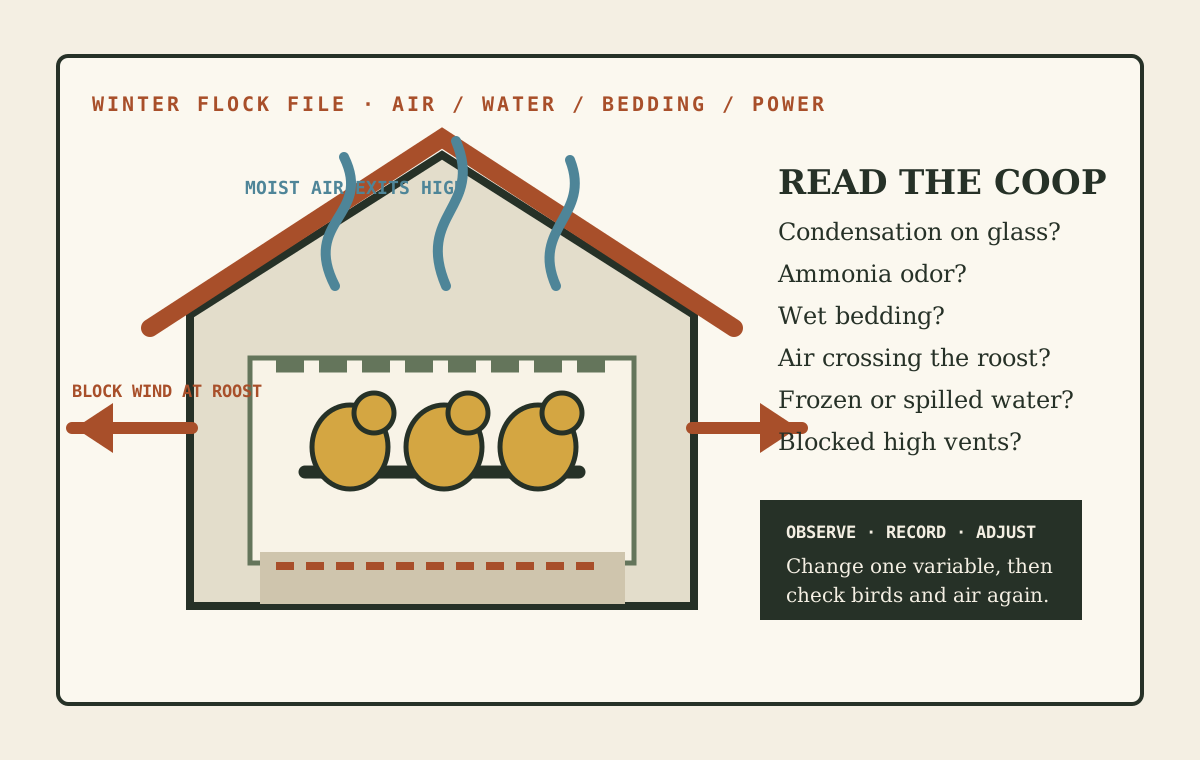
A cold coop can tempt a keeper to close every opening. That can trade one problem for another. Chickens add moisture through breathing and manure; spilled water and wet litter add more. In a tight building, that moisture condenses on cold surfaces while ammonia and stale air accumulate. The coop may feel less windy to a person at the door and still become a worse place for the flock.
The opposite mistake is treating every opening as ventilation. A gap that sends outdoor air directly across birds on the roost is a draft. A protected path that admits and exhausts air without driving wind, rain, or snow across the birds is part of a ventilation system. Penn State Extension summarizes the goal as ample air movement without a draft and warns that dampness or ammonia buildup signals too little ventilation for the birds housed there.
This ledger cannot diagnose illness, frostbite, respiratory disease, or a coop design from a distance. Bird size, breed, age, health, stocking density, climate, building shape, and equipment all matter. If birds show breathing trouble, weakness, injury, loss of appetite, unusual behavior, or sudden illness or death, contact a veterinarian or animal-health official promptly. Follow local animal-welfare rules and qualified Extension or veterinary guidance.
Start with evidence, not a vent formula
Search discussions often ask for one square-foot-per-bird rule or one indoor humidity target. Current Extension guidance does not support a single number for every backyard coop. University of Minnesota Extension says ventilation needs depend on coop and flock size. Penn State ties humidity control to adequate space per bird and the building itself. Utah State explains the air path: in cold weather, air introduced near the roof can mix before moving through the building, picking up moisture before stale air exits.
Use those principles to make a site-specific record. Sketch the floor, walls, roof, doors, windows, fixed vents, adjustable vents, roosts, nests, litter, water, feed, and electrical equipment. Add the direction of prevailing winter wind and the sides where snow or rain typically enters. Mark every opening relative to a bird’s head and body on the roost.
| Ledger line | Record | What it can reveal |
|---|---|---|
| Weather | Outdoor temperature, wind direction and precipitation | Whether a change appears only under certain conditions |
| Openings | Which vents, windows and doors are open; screens clear | The actual air path, not the intended one |
| Roost zone | Air movement, damp feathers, bird position and crowding | A direct draft or inadequate roost space |
| Surfaces | Condensation, frost, drips and wet corners | Moisture that is not leaving |
| Litter | Dry, damp, caked, unusually dusty or strong odor | Leaks, manure load, poor air exchange or maintenance gaps |
| Water | Liquid, clean, stable; spill or leak absent | Hydration and an avoidable moisture source |
| Birds | Appetite, drinking, posture, feet, combs, breathing, activity | A change needing closer attention or professional help |
Trace air at bird level and above it
Stand outside first. Look for snow packed against a vent, plastic sheeting folded over an opening, dust-clogged screening, a swollen door, or wind driving precipitation through a gap. Then observe the coop without placing your face close to litter or disturbing the flock. A lightweight strip used safely near an opening can show direction, but never leave loose material where birds can reach it or use smoke, flame, aerosols, or fumes as an airflow test.
At roost height, the aim is shelter from a stream of cold air. Above the birds, the aim is a path for humid, stale air to leave. UNH Extension advises keeping ventilation away from prevailing winds while protecting the coop from wind, rain, and snow. Penn State recommends locating openings away from prevailing winds and angling inlets upward so incoming air mixes before reaching birds. These are design principles, not permission to cut holes without checking the structure, predator protection, weather exposure, and local requirements.
If the coop has powered ventilation, use the designer’s or manufacturer’s instructions and have electrical work completed by a qualified electrician. A fan can fail, ice, clog, short-cycle, or pull air through an unintended crack. Record how the coop performs during a power outage and link that dependency to the site’s power-outage map.
Read condensation, odor, and litter together
Condensation on windows, frost on fasteners, wet roof sheathing, or dripping walls indicates moisture reaching a cold surface faster than the system removes it. University of Minnesota Extension connects high moisture and cold with condensation and frostbite risk. It also notes that chicken manure contains substantial water, making manure removal and bedding management part of ventilation.
An ammonia odor is a warning to act, not a measurement tool. Move into fresh air if the atmosphere irritates eyes or breathing, remove birds according to a safe flock plan, and correct the source with veterinary or Extension guidance. Do not rely on fragrance, ozone, disinfectant fog, or another odor to mask it. Check for wet litter under roosts and waterers, roof leaks, snow entry, blocked vents, crowding, and delayed manure removal.
Choose a bedding routine you can inspect and maintain. If you use deep bedding, follow a credible Extension method suited to the building and flock; piling clean material over persistent wetness does not repair a leak or inadequate ventilation. Record the bedding type, starting depth, additions, wet spots removed, manure-management dates, and the conditions that trigger a full cleanout.
Keep water available without soaking the coop
Clean, unfrozen water is essential throughout winter. Put the waterer where birds can reach it without crowding and where spills do not saturate the roost area or block an exit with ice. Stabilize the unit as its manufacturer directs, inspect valves and seals, and clean it on schedule. If the outdoor arrangement is protected and appropriate for the flock and climate, Penn State notes that placing water outside the house can reduce indoor humidity.
A heated waterer or base is an electrical system, not just a winter convenience. Use only listed equipment intended for that application, follow its manual, protect it from birds, water, bedding, damage, and rodents, and have the permanent supply installed to code by a qualified electrician. University of Minnesota advises using extension cords only temporarily and using a professional electrician for coop power. Never place an improvised lamp, hot plate, open heating element, or homemade wiring among combustible bedding.
Write a no-power water chore before the first freeze. The first-freeze water audit provides a way to record source, containers, route, labor, refill timing, and the person responsible.
Decide on heat with the whole flock in view
Advice about supplemental heat varies because flocks and climates vary. UNH Extension generally advises against adding heat in a properly built, dry, sheltered coop because of fire risk, while University of Minnesota gives a temperature-based recommendation and stresses that lighter, smaller, older, or unhealthy birds may need extra care. These differences are a reason to consult local Extension staff and a poultry veterinarian, not a reason to pick whichever rule is easier.
Record breed and body size, age, health, acclimation, comb and foot condition, roost access, stocking changes, local extremes, outage risk, and the exact device under consideration. Follow veterinary advice and the equipment manual. Do not use a heat lamp or other device merely to make the room feel comfortable to a person. If heat is required, the installation, clearances, guarding, wiring, attachment, and backup must be professionally safe for a dusty building with animals and combustible material.
Protect winter air without weakening biosecurity
Vent openings must also resist predators and wild-bird entry without becoming clogged. USDA APHIS says avian disease can spread through wild birds, other animals, visitors, clothing, equipment, vehicles, feed, and water. Its updated biosecurity guidance emphasizes clean footwear and tools, restricted visitors, protected feed and water, wildlife separation, and quick action when birds become sick.
Keep dedicated boots at the flock boundary. Store feed securely. Prevent wild birds and rodents from accessing feed, water, litter, or the coop. Do not use untreated surface water for poultry. Clean tools before moving them between bird areas, and avoid borrowing equipment unless it can be cleaned and disinfected as current guidance directs. A covered winter run should still drain, ventilate, and withstand expected snow and wind loads; ask a qualified local professional about structural concerns.
Run a seven-morning ventilation check
- Record outdoor temperature, wind, and precipitation before opening the coop.
- Observe vent position and whether snow, ice, dust, plastic, or bedding blocks the intended path.
- Check for condensation or frost on the same marked surfaces each day.
- Inspect litter beneath roosts and around water; remove wet material and correct leaks.
- Observe birds before changing anything: position, activity, eating, drinking, breathing, feet and combs.
- Make one safe adjustment within the coop design and professional guidance.
- Record the result the next morning under comparable conditions.
The sequence matters. Changing vents, bedding, water placement, and heat together may improve the room, but it will not show which dependency failed. One recorded adjustment makes the next decision clearer. During severe weather or a health concern, skip the experiment and use professional help.
Flock file / one-page record
- Coop dimensions and current bird count
- Roost height, length and bird arrangement
- Vent locations, sizes and seasonal settings
- Prevailing wind and storm-facing openings
- Condensation and frost check points
- Litter and manure routine
- Water system and no-power backup
- Electrical equipment and inspection record
- Bird health observations and veterinarian
- Biosecurity boundary and dedicated tools
Use three triggers instead of one temperature
First, use an air trigger: condensation, frost, ammonia odor, damp litter, or stale air means the moisture and waste load needs attention. Second, use a weather trigger: a wind shift, blowing snow, rapid freeze, roof loading, or outage changes how the structure behaves. Third, use a bird trigger: abnormal posture, persistent huddling, repeated foot lifting, poor intake, respiratory signs, injury, or tissue changes requires prompt evaluation.
That three-part trigger is more useful than chasing a comfortable indoor number. The ledger helps another caregiver see what “normal” looked like yesterday, what changed overnight, which adjustment was made, and when to call for help.
Sources
Reviewed October 13, 2026. Local weather, flock needs, building design, codes, equipment manuals, Extension specialists, veterinarians, and animal-health officials should shape the final plan.
- Penn State Extension — Small Scale Poultry Housing (updated June 25, 2026).
- University of Minnesota Extension — Caring for Chickens in Cold Weather (reviewed 2026).
- Utah State University Extension — Housing Backyard Chickens.
- University of New Hampshire Extension — How Should I Take Care of Backyard Chickens in the Winter?.
- Oregon State University Extension — Living on the Land: Backyard Chicken Coop Design.
- USDA APHIS — Biosecurity Basics (modified September 29, 2026).
- USDA APHIS — How to Protect Your Flock from Avian Influenza (modified May 31, 2026).